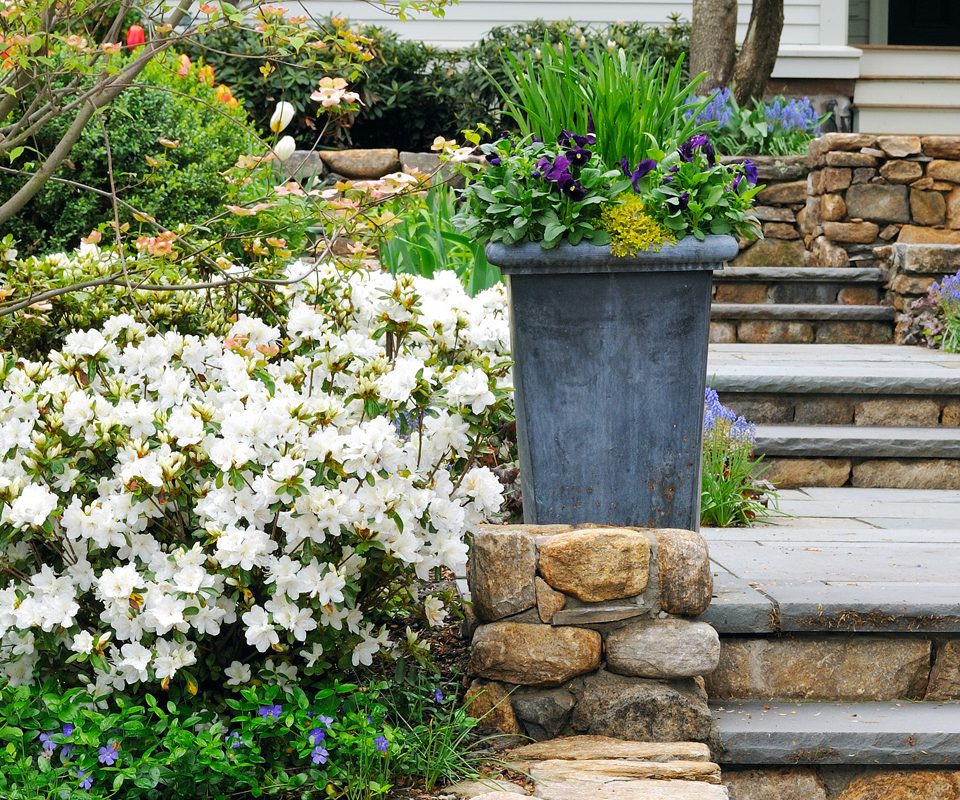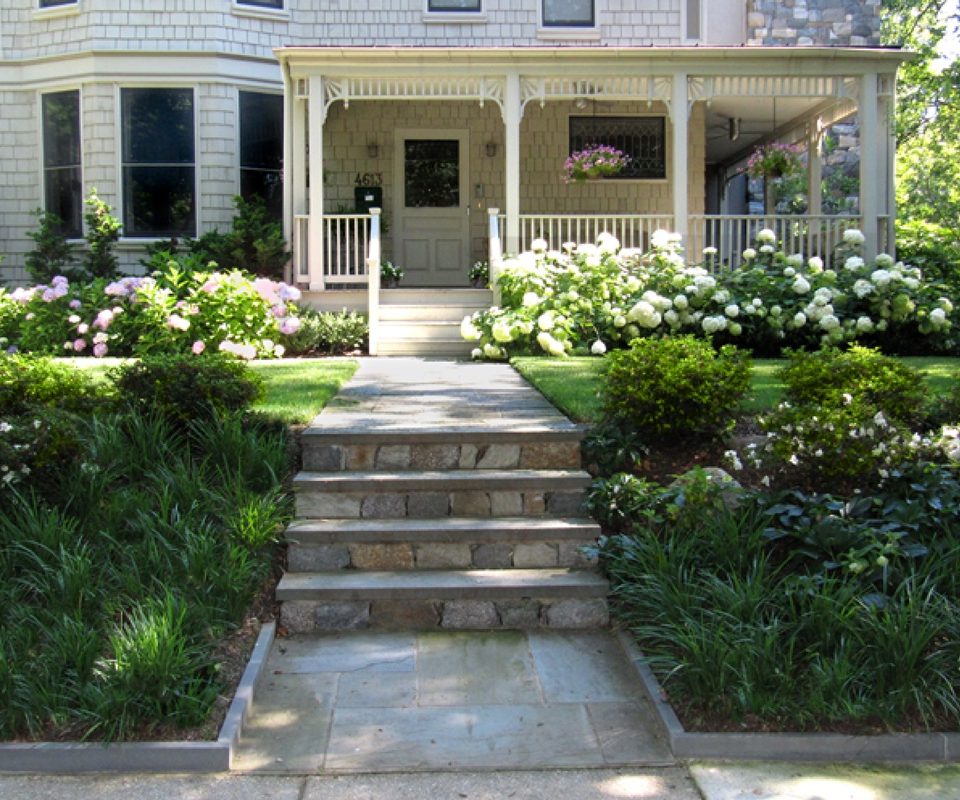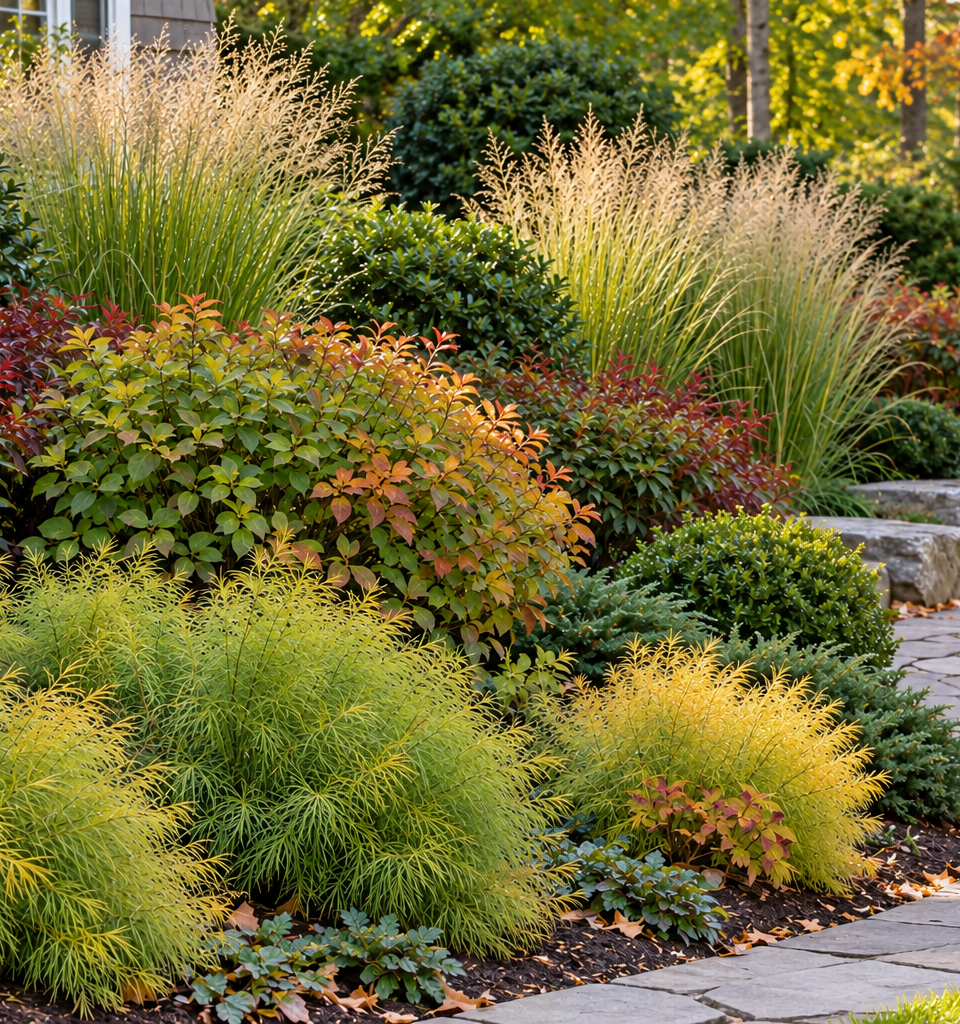
A garden can still feel deliberate after flowers fade. Winter interest comes from structure: evergreen mass, branching patterns, colorful bark, berries, seed heads, and the way paths and views hold together under low light or snow. Plan those elements first, then let summer flowers build around them.
The goal is not to fill every inch with plants. A few well-placed forms are easier to see and maintain than a crowded collection of winter features. Start by looking out from the rooms and paths you use most in January.
Build the framework with evergreen and deciduous form
Evergreens give a bed weight in winter, but they work best when their shapes vary. A narrow conifer, a rounded broadleaf evergreen, and a low mound can create more depth than a single row of identical plants. Pair them with deciduous shrubs and small trees whose branches are attractive when bare.
Before planting, check mature dimensions from every important view. An evergreen that seems small at purchase can close a window view or crowd a walkway in a few years.
Use bark and stems as a color layer
Some dogwoods offer red or yellow young stems, while certain birches contribute peeling or patterned bark. These plants are most effective against a darker backdrop, such as evergreens or a fence. Their color and texture are easier to appreciate when they are grouped rather than scattered as single specimens.
Choose species that fit your site and maintenance approach. Some stem color is strongest on younger growth and may require periodic renewal pruning, while other plants need little more than room to develop naturally.
Add berries and seed heads with care
Winterberries, viburnums, and other fruiting shrubs can offer color and wildlife value, but fruit display depends on the species, plant sex, and nearby pollination partners. Read the plant tag closely and ask how many plants are needed for fruit. Seed heads from grasses and sturdy perennials can add movement and hold frost beautifully when left standing.
Make room for light, snow, and views
Winter sun sits lower, snow reflects light, and the garden is seen from different places than it is in summer. Use pale bark, dark foliage, and clear edges where they will be visible from inside the home. Keep sightlines near driveways and walks open, and avoid plants that will interfere with snow storage or access.
Design for four seasons, not one dramatic month
A good winter plant should earn its place in other seasons too. Consider leaf texture, shade cast, flowers, fruit, fall color, and the maintenance it will need in July. A layered planting usually gives more value than a single novelty plant chosen only for winter.
Use repetition and restraint
Winter details are easier to see when the design is not crowded. Repeat one or two reliable forms, such as a grass, evergreen shape, or stem color, and give them breathing room. The result feels calmer from indoors and makes the garden easier to maintain once spring growth begins.
Use winter garden care to protect the plants you already have, then use  Dirt AI to test a planting layout that has a clear winter structure as well as summer color.
share this article