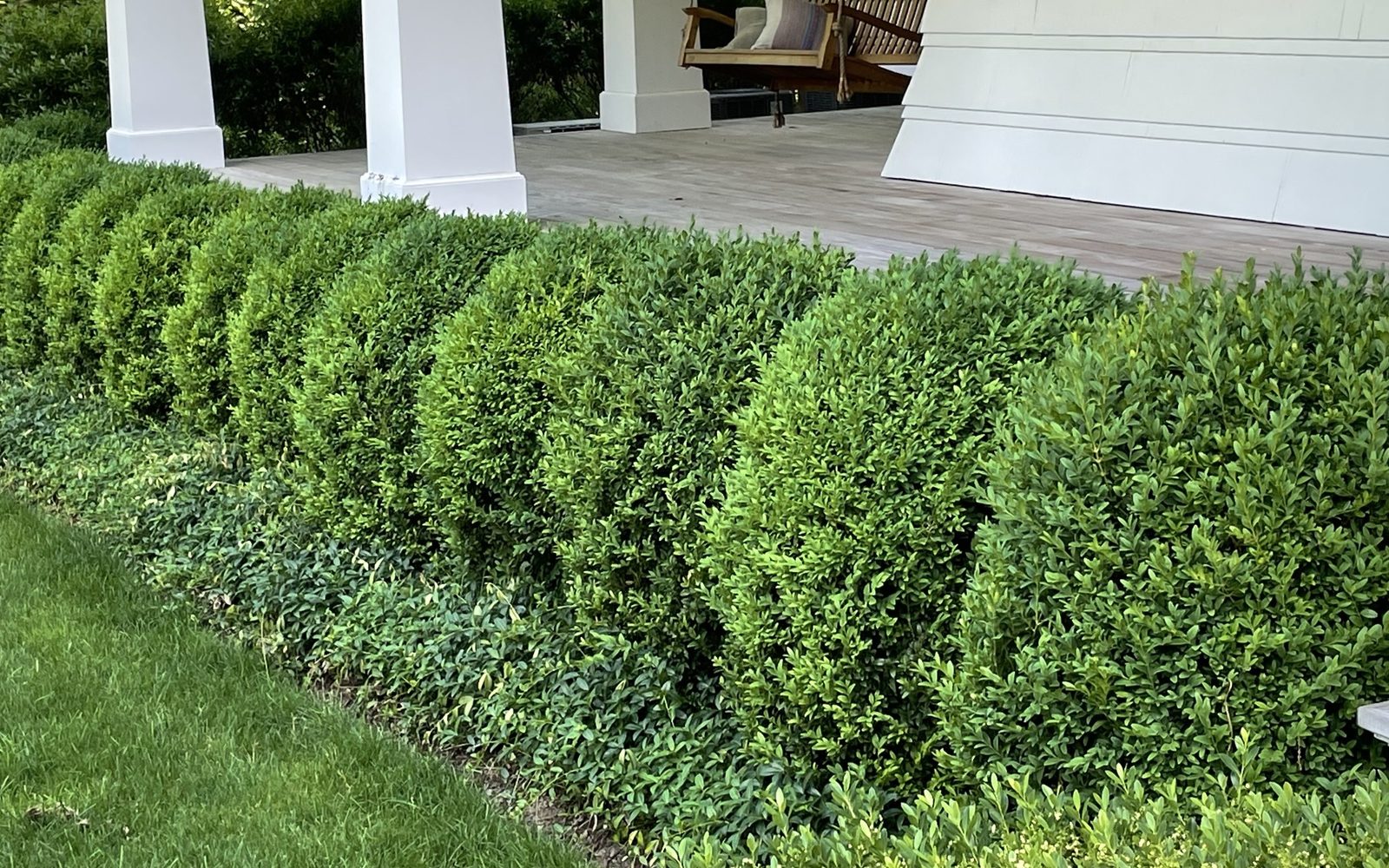
Quick answer: Boxwood can make a crisp evergreen hedge or border when it is chosen for the local climate, planted with enough air flow, and maintained with thoughtful pruning. It is not a set-it-and-forget-it shrub: spacing, winter exposure, and early attention to leaf problems matter.
Choose boxwood for the job it needs to do
Before buying boxwood, decide whether you need a low edge, a medium hedge, a clipped form, or a loose evergreen mass. Different varieties mature at different heights and widths. A plant sold in a one-gallon pot may look small enough for a narrow strip, but a crowded hedge becomes more vulnerable to poor airflow, winter stress, and leaf disease.
Look for a variety recommended for your climate and choose a site with suitable sun, drainage, and protection from harsh winter wind. A formal hedge needs regular shaping; a looser planting can be more forgiving and often looks more natural as it grows.
Plant a hedge with mature spacing in mind
Plant boxwoods at the same depth as they grew in the container. Make the planting area broad enough for roots to move outward, and avoid a trench that traps water beneath the hedge. Follow the label’s mature width when setting the spacing. Plants that barely touch at maturity can create a full screen without becoming a solid, damp wall of foliage.
- Water deeply after planting and through dry periods in the first two seasons.
- Mulch lightly to keep roots cooler and soil moisture steadier, keeping mulch away from stems.
- Keep lawn equipment, piled snow, and heavy foot traffic away from the root zone.
- Do not plant directly under a roofline where repeated runoff will soak foliage and roots.
For a broader screening strategy, see how to choose privacy hedge plants. The best privacy planting may be a mixed border rather than one long line of the same shrub.
Prune for health, not just a perfect outline
Use clean, sharp tools to remove dead, damaged, or crossing branches first. Then shape lightly, taking care not to shear so tightly that the outside blocks light from reaching the interior. A hedge that is slightly wider at the base than the top receives better light lower down and is less likely to become bare at the bottom.
Do not repeatedly prune late in the growing season if it will push tender new growth into winter. Pruning timing depends on climate and plant vigor, so ask a local garden professional if you are changing the size of an established hedge rather than making a light seasonal trim.
Watch for winter injury and leaf problems
Brown or bronzed foliage after winter can be caused by wind, sun, and moisture loss. Watering appropriately into fall, choosing a protected site, and using a breathable wind barrier where needed can reduce stress. Dark stem streaks, rapid leaf drop, or unusual leaf spotting deserve a closer look; do not assume every issue is normal seasonal bronzing.
Take clear photos and seek local diagnosis before using any treatment. Good spacing, clean tools, and avoiding unnecessary handling of wet foliage are practical first steps for a healthier planting. Boxwood is also toxic to dogs, cats, and horses, so keep it out of reach of pets that chew ornamentals.
Make the hedge fit the whole garden
Boxwood works best when it supports the garden rather than becoming the entire garden. Use it to define a path, frame a seating area, or give flowering perennials a calm green backdrop. Pair it with plants that soften the geometry and extend seasonal interest. Read our winter garden care guide, then use  Dirt AI to test the spacing and companion planting before you install a full hedge.
share this article