Quick answer: Ornamental fountain grass can add movement, soft texture, and late-season interest to a sunny bed, but the common name covers several different grasses. Read the botanical name and cultivar on the label, check local invasive-plant guidance, and choose a grass whose mature size works with the rest of the garden.
Know which fountain grass you are buying
“Fountain grass” is a design description as much as a plant name: arching leaves rise from a clump and spill outward like water from a fountain. Some selections are grown as seasonal accents, while others return year after year in the right climate. Their hardiness, mature height, and tendency to reseed can be very different. Before planting, ask the garden center for the full name, how it performs locally, and whether a non-invasive or native alternative would better suit the site.
This small step matters because a beautiful plant in the wrong region can become more work than it is worth. A responsible planting plan includes what will happen after the first year, not just how the bed looks on the day it is installed.
Plant for sun, drainage, and room to move
Most ornamental fountain grasses need at least six hours of sun for the best color and plumes. They prefer soil that drains well; roots that sit wet through winter are more likely to decline. Plant at the same depth as the nursery pot, water deeply while establishing, and space according to the label’s mature width rather than the small size of a new plant.
- Use one large clump as a focal point, or repeat a single variety for a calmer, more intentional look.
- Keep taller grasses behind lower flowering plants so they do not block paths or views.
- Water new plants during dry spells; established drought tolerance is not the same as drought-proof.
- Skip heavy fertilizer unless a soil test or clear deficiency points to a need.
Build movement into a mixed border
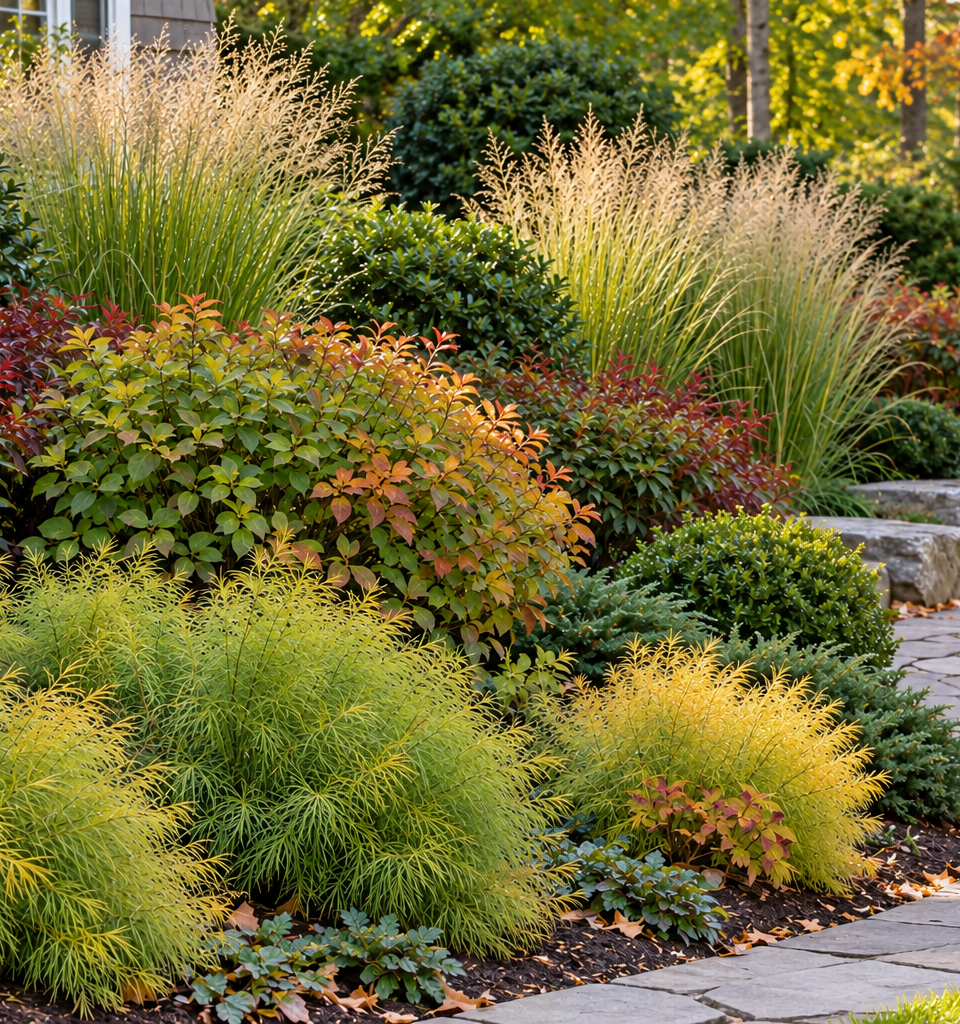
Fountain grass is most successful when it has companions. Pair its fine blades with broad-leaved perennials, repeated flower shapes, and a few evergreen forms that keep the bed visible in winter. In a small space, use one clump at the back corner of a bed or in a large container. In a larger border, repeat it at intervals to lead the eye through the garden. The goal is movement without making the entire bed look fuzzy or overfilled.
For a color-and-texture approach that stays useful through the season, explore garden color design for curb appeal.
Manage seed heads and seasonal cleanup
Leave healthy plumes standing through part of winter if they add structure and are appropriate for the plant and site. Cut back brown foliage in late winter or early spring before new growth begins, using gloves and clean tools. If a grass is known to self-seed or is flagged locally as invasive, remove seed heads before they mature and replace it with a better-behaved choice. Never move questionable divisions or seed heads to another property.
Consider a native or non-invasive alternative
A garden can have the same soft, moving effect without relying on a grass that may spread beyond the bed. Local garden centers and Extension resources can help identify regionally suitable native grasses. Native plants for Northeast gardens is a helpful starting point for building a more locally adapted planting palette.
Measure the bed, note sunlight and views from indoors, then use  Dirt AI to test a grass-forward garden plan before committing to a full season of plants.
share this article