Quick answer: Catmint is a low-maintenance perennial for sunny, well-drained beds. It produces soft blue or lavender flowers, fragrant foliage, and a relaxed mounding form; cut it back after its first bloom flush for a tidier plant and the chance of later flowers.
Catmint is not always the same as catnip
Both catmint and catnip belong to the Nepeta genus, but garden-center labels may refer to different species or cultivars. Ornamental catmint is usually selected for long flowering, a neat habit, and color in borders. Catnip is more often grown for its stronger appeal to some cats. Read the label rather than assuming every Nepeta will have the same size, scent, or response from pets.
For a flower border, choose a selection that fits the mature height and spread you need. Low forms work at path edges, while taller forms can soften the front of roses or shrubs. Repeating one variety in several places will look more intentional than scattering many unrelated plants.
Give catmint sun and drainage
Catmint is most compact and floriferous in full sun. It can tolerate light shade, but too little sun often makes stems lean and flowering lighter. The soil does not need to be rich, but it should drain well. In dense clay, loosen the surrounding planting area and avoid creating a wet pocket around the crown.
- Plant at the nursery soil level and water deeply after planting.
- Space plants for their mature width so they can mound without crowding neighbors.
- Water new plants during dry spells; established plants generally need less help.
- Use only a light layer of mulch and keep it away from the crown.
Do not overfeed catmint. Excess fertilizer can create fast, floppy growth that needs more staking and cutting back.
Cut back after the first bloom flush
When the first wave of flowers starts to fade, shear or cut the plant back by roughly one-third to one-half, leaving healthy foliage at the base. Water it afterward if conditions are dry. This simple reset often makes the plant fuller and can bring a later flush of bloom. Remove only damaged or dead stems in early spring before new growth begins.
A catmint that collapses may be receiving too much shade, too much fertilizer, or too little room. Before adding supports, check whether a smaller cultivar or sunnier position would solve the real problem.
Use catmint to connect a garden visually
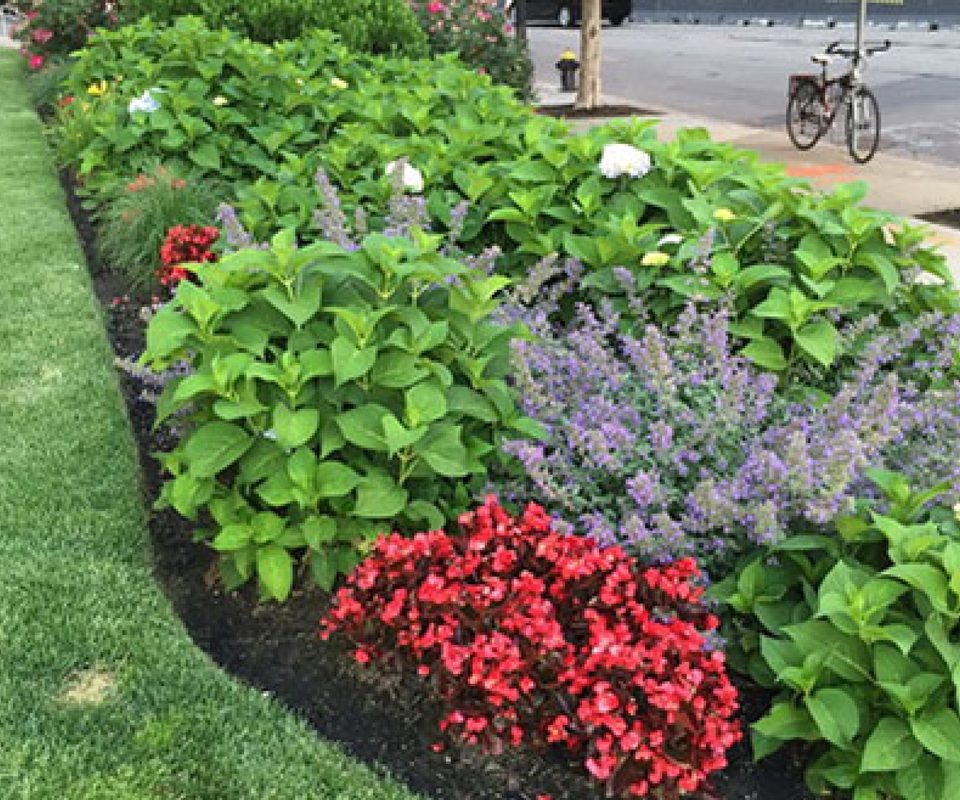
Catmint bridges gaps between bolder plants. Its cool-colored flowers soften the base of shrubs, repeat along a path, and make warm flower colors look brighter. Pair it with plants that need similar sun and drainage, then leave enough bare soil for each clump to develop. The resulting bed feels layered instead of packed.
For a broader planting strategy, see how to plan a pollinator-friendly garden and garden color design ideas.
Make the next planting decision easier
Catmint is an excellent connector, but it still needs a clear role. Measure the bed, photograph it in the middle of the day, and note existing plants you want to keep.  Dirt AI can help you test a balanced, low-maintenance layout before buying more perennials.
share this article