AI is fundamentally changing how people experience and participate in designing their outdoor spaces. Here are 7 ways it matters for your customers.
AI isn’t just making garden design faster—it’s fundamentally changing how people experience and participate in designing their outdoor spaces. For customers, the shift shows up in a few meaningful ways.
1. From Imagination to Instant Visualization
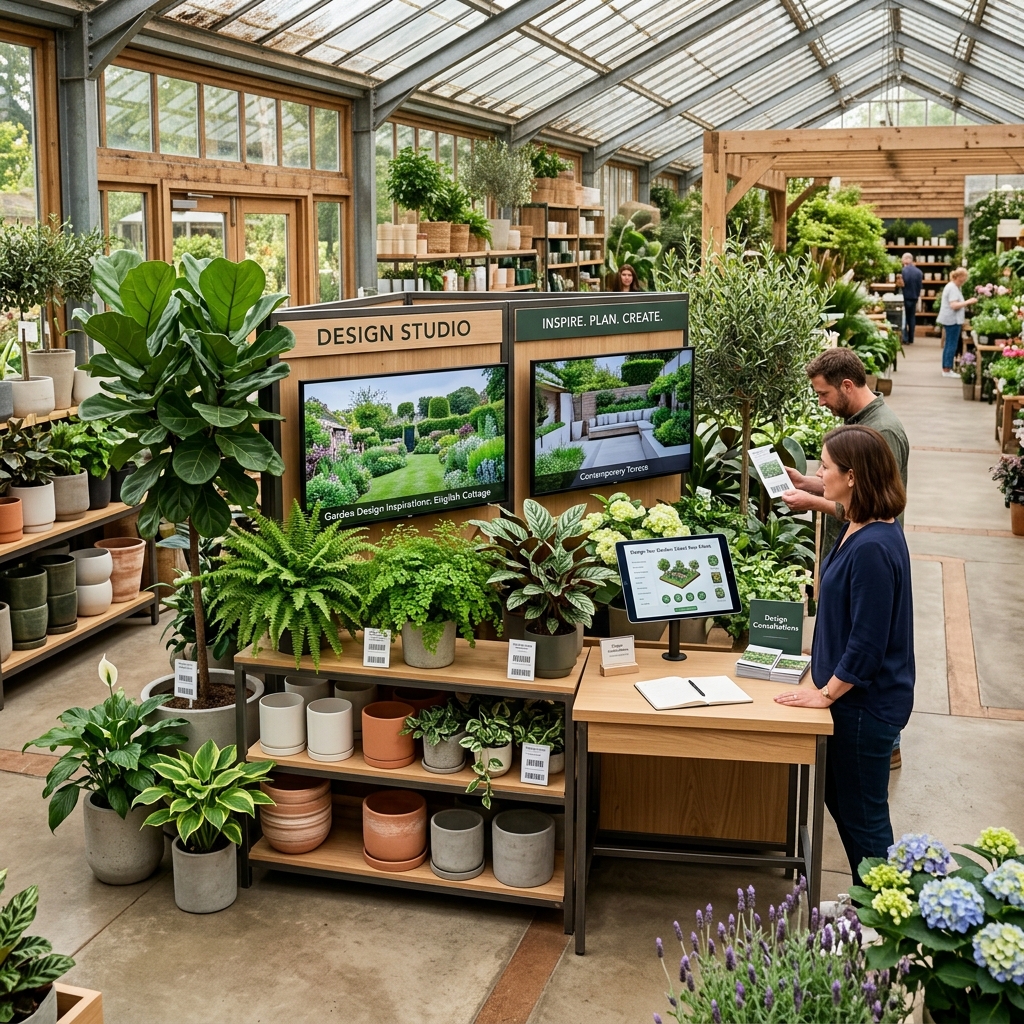
Traditionally, clients had to interpret 2D plans or trust a designer’s vision. AI-driven tools can now generate realistic renderings—or even simulate seasonal growth—based on a photo of their yard. Customers see their space transformed before committing, which reduces uncertainty and speeds decision-making.
2. Personalization at a Deeper Level
AI systems can factor in climate data, soil conditions, maintenance preferences, budget, and even lifestyle (e.g., entertaining vs. low-maintenance retreat). Instead of a generic “nice garden,” customers get a design tailored to how they actually live. This is where AI starts to feel less like a tool and more like a collaborator.
3. Lower Barrier to Entry
What used to require hiring a landscape architect is now accessible to homeowners directly. AI-guided platforms let users experiment with layouts, plant palettes, and styles themselves—often with professional-grade guidance built in. That expands your customer base beyond those who would traditionally engage a designer.
4. Faster Iteration, Better Outcomes
Customers can explore multiple design directions quickly—modern vs. cottage, native vs. ornamental, high vs. low water use—without starting from scratch each time. This iterative loop leads to more confident decisions and often higher satisfaction with the final result.
5. Integrated Plant Intelligence
AI can recommend plants not just based on aesthetics, but on survivability and performance—matching species to microclimates, sun patterns, and water constraints. That reduces plant failure, which is one of the biggest hidden frustrations for customers.
6. Real-Time Collaboration with Professionals
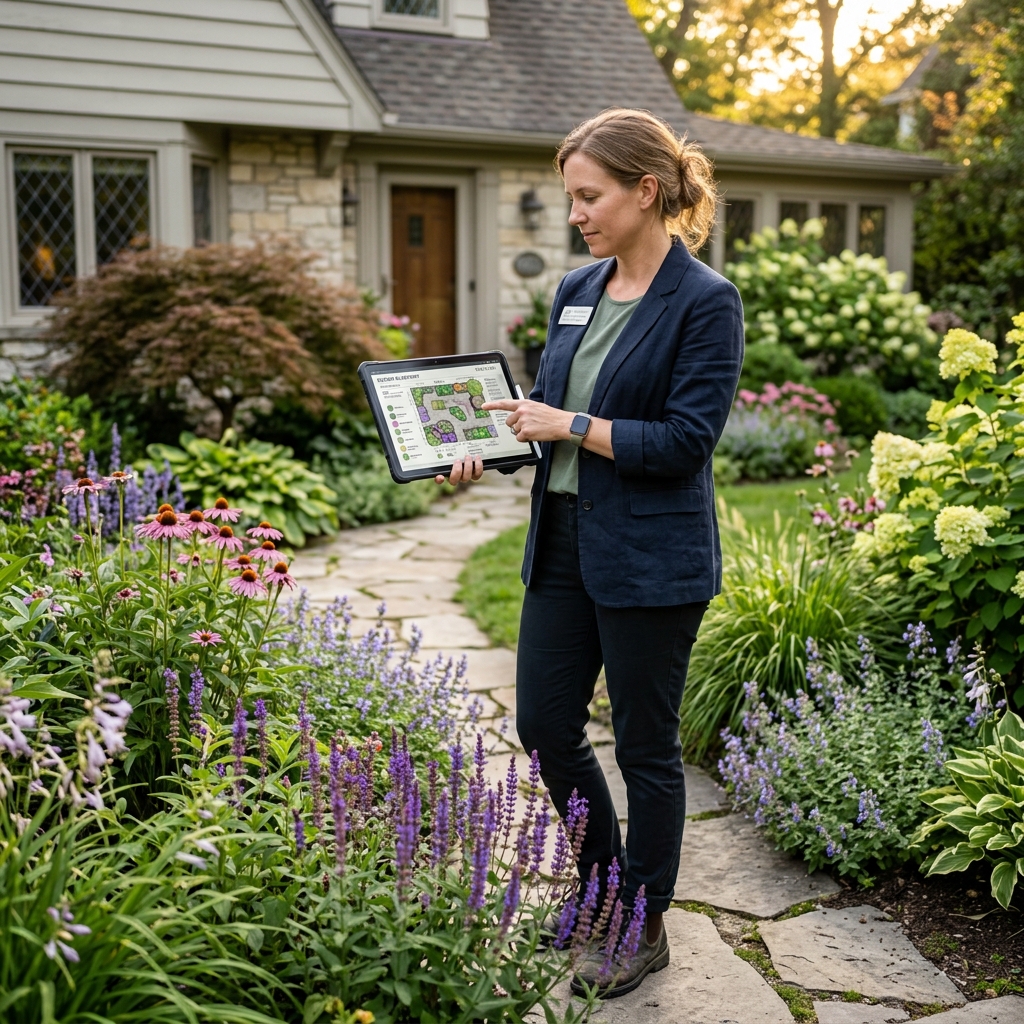
Rather than replacing designers, AI is shifting the interaction. Customers come into conversations with clearer ideas and even draft concepts. Designers then refine, elevate, and ensure feasibility. The relationship becomes more collaborative and less top-down.
7. Lifecycle Thinking
AI tools are beginning to extend beyond design into care—predicting maintenance schedules, growth patterns, and long-term evolution. Customers are starting to think in terms of how the garden will mature, not just how it looks on day one.
The Catch (and Opportunity)
AI can generate a lot of “pretty” designs, but not all are buildable, regionally appropriate, or emotionally resonant. The real advantage comes when AI is paired with domain expertise—horticulture, design sensibility, and local knowledge.
That’s exactly where gardenUP sits—at the intersection of intelligent design technology and deep horticultural expertise. We’re not replacing the garden professional. We’re giving them superpowers.