For Landscape Contractors, Fall Planning Begins in August
August may still be the heart of summer, but the fall planting season is much closer than it feels. For landscape contractors, the next few weeks are an important opportunity to get projects organized before September and October bring tighter schedules, heavier demand, and more competition for plant material.
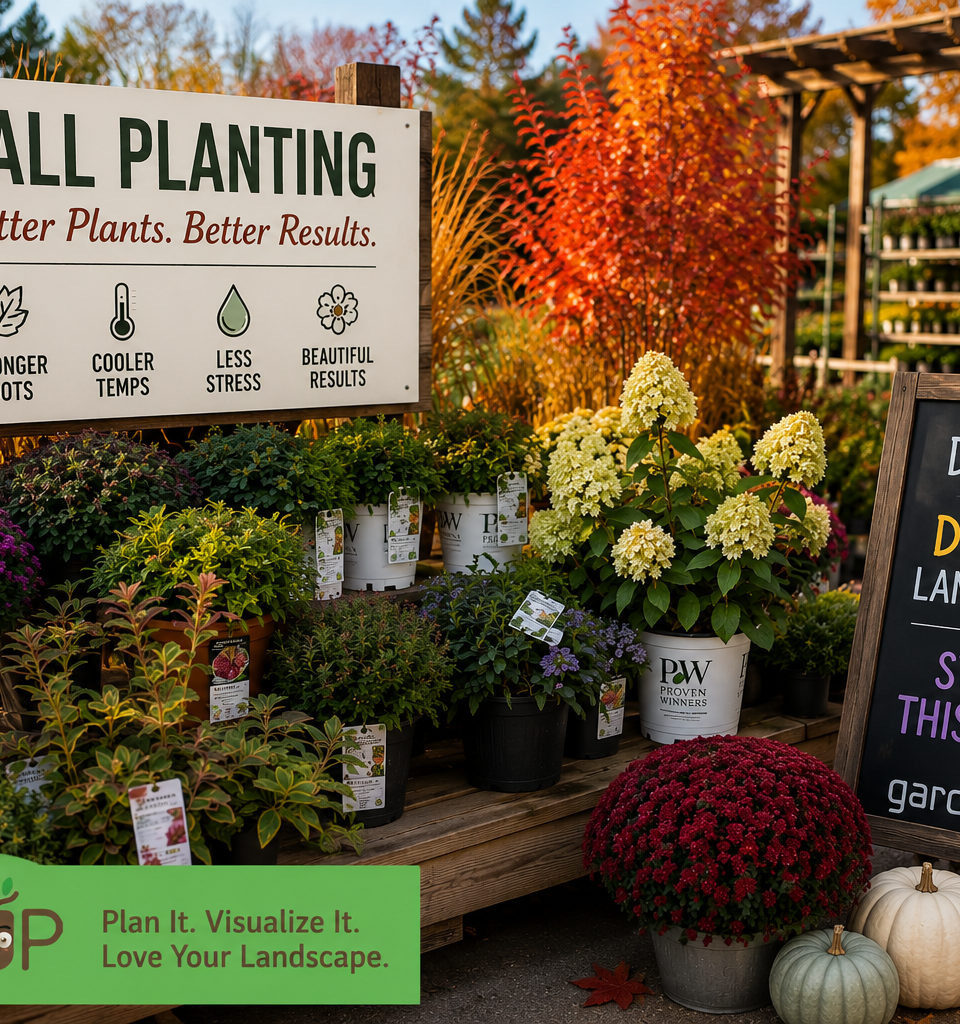
Fall has long been one of the most productive times to install trees, shrubs, and many perennials. Cooler air temperatures reduce heat stress, soil remains warm enough to support root growth, and homeowners are often ready to tackle projects they postponed during the hottest part of summer. But those advantages can also create a rush.
The best way to manage that rush is to start now.
1. Move Clients from “Thinking About It” to a Clear Plan
Many late-summer clients are interested in a fall project but have not yet made the decisions needed to get it on the schedule. This is the time to reconnect, refine the scope, and give them something concrete to react to.
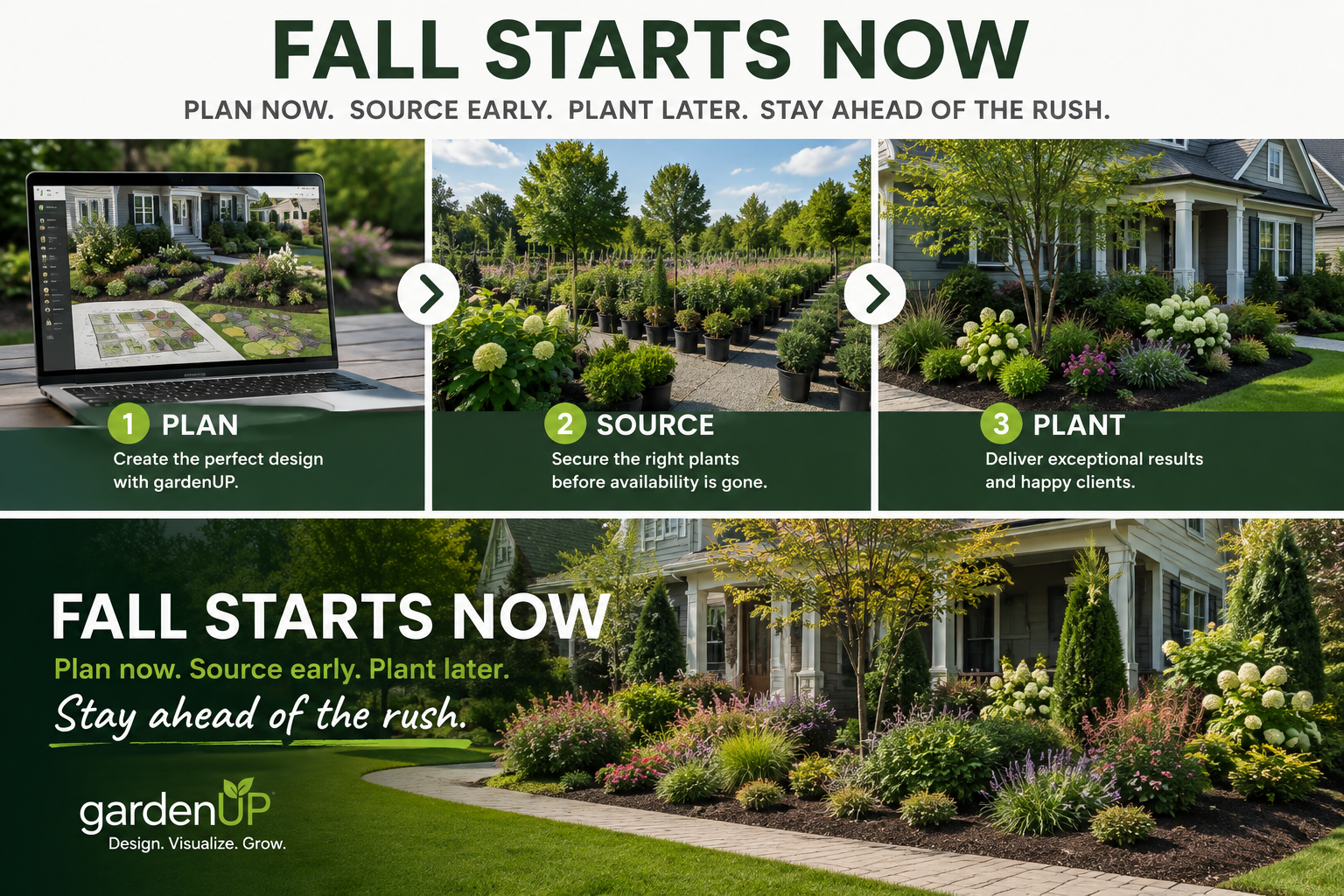
A visual planting concept can be especially useful here. Homeowners may struggle to picture how a group of plants on a proposal will work together. Showing the intended layout, structure, and overall look can make the project easier to understand—and easier to approve.
2. Check Plant Availability Before the Rush
The perfect plant on paper only works if it is available when installation day arrives. As fall demand increases, popular varieties and commonly specified sizes can become harder to source.
Reviewing plant needs now gives you time to secure material or make thoughtful substitutions. If a change is necessary, it can be incorporated into the design before the crew is on site rather than becoming a last-minute compromise.
3. Protect the Design When Substitutions Are Needed
A substitution should do more than simply fit the same space. Consider the role the original plant was meant to play: height, spread, texture, color, season of interest, screening, structure, or repetition within the design.
When substitutions are handled early, you have time to choose a plant that supports the original design intent—and explain the change clearly to the client.
4. Build the Fall Schedule Before Everyone Wants the Same Week
Clients often think of “fall planting” as a single moment on the calendar. Contractors know it is a season—and a busy one. Starting the conversation in August lets you establish realistic installation windows and spread work across the season rather than trying to fit every project into the same few weeks.
5. Make the Client Conversation Easier
One of the biggest delays in landscape sales is not always price or availability. Sometimes the client simply cannot visualize the recommendation well enough to make a decision.
gardenUP is designed to help bridge that gap. By giving clients a clearer visual understanding of a planting concept, contractors can make recommendations easier to communicate, create more confidence in the finished result, and help projects move from discussion to approval.
The Fall Rush Is Coming—Use August to Get Ahead
The contractors who make the most of fall planting season are not waiting for the first cool September morning to start planning. They are identifying opportunities, confirming plants, communicating with clients, and building their schedules now.
Fall starts now. A little preparation in August, along with the right tools from gardenUP, can make the entire season smoother.
share this article